
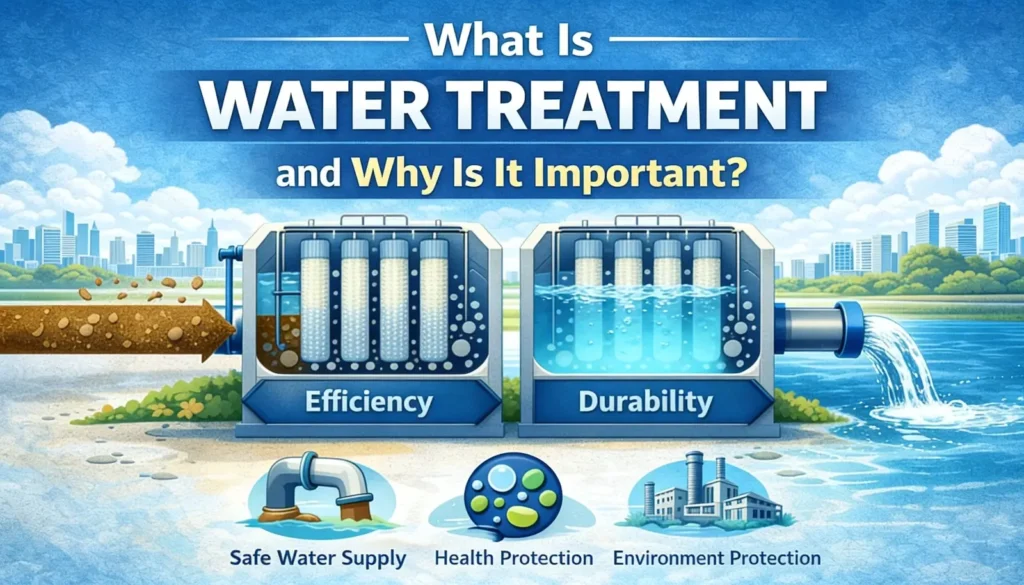
When someone asks what is water treatment, the answer is simple. It’s the controlled cleaning of water so it becomes usable. Safe to drink. Safe to discharge. Safe to run through machines. The treatment of water depends on where it’s coming from and where it’s going.
Introduction to Water Treatment
Water moves through soil, pipes, tanks, and open sources before reaching people. Along that path, it collects things. Some natural. Some not. That’s why water treatment exists. Not as an option but as a requirement.
What Is Water Treatment?
It’s a process that removes unwanted substances from water. Sometimes that means visible particles. Sometimes it means dissolved minerals. Other times, it means destroying microorganisms. There isn’t one fixed method. The water treatment process changes depending on the quality of the raw water.
Why Water Treatment Is Necessary for Human Health
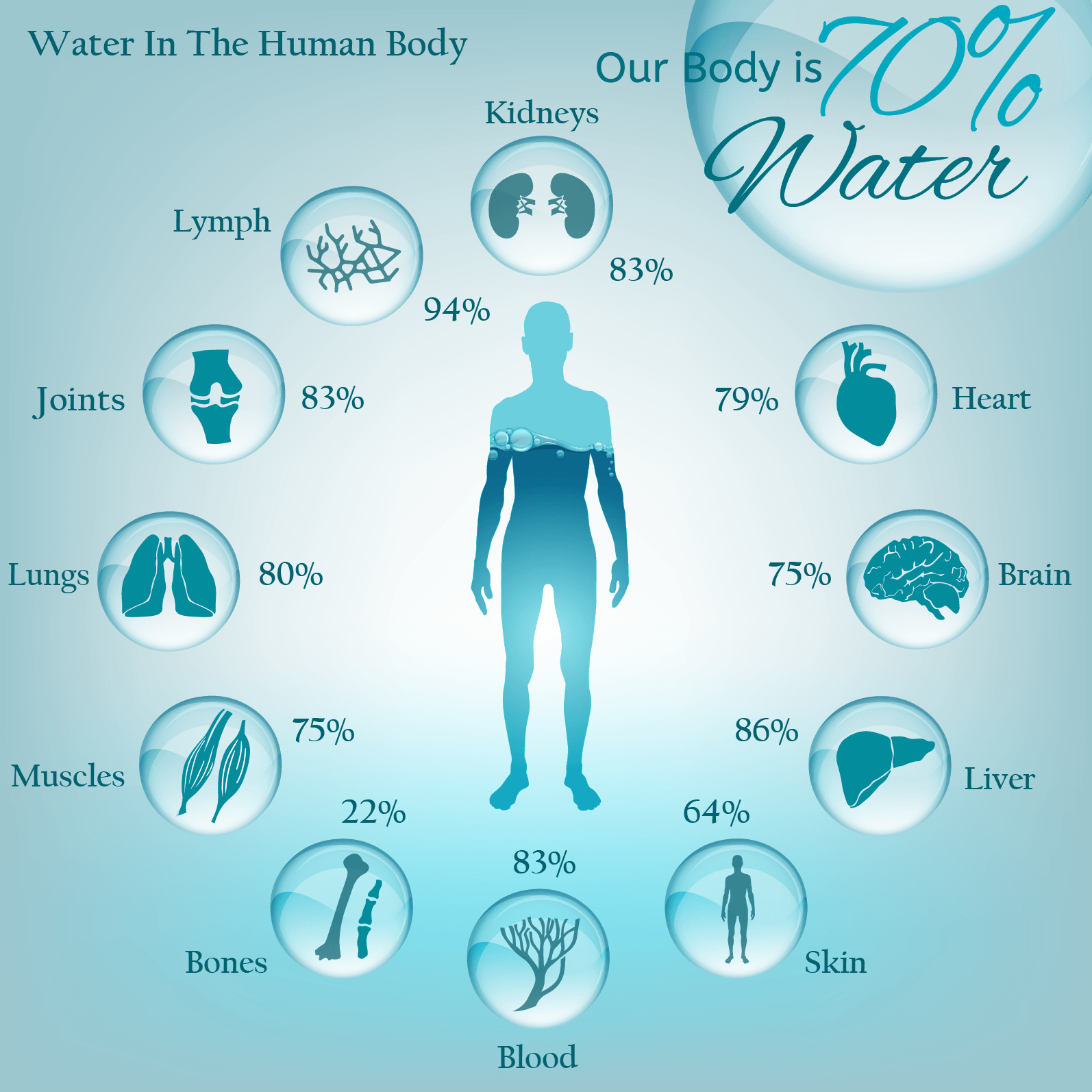
Untreated water carries risk. Not always obvious, but real. Contaminated water can cause infections. In some cases, long-term exposure to metals or chemicals causes more serious problems. The importance of water treatment shows up in daily life. We drink water. Cook with it. Wash food with it. If it’s not treated properly, health issues follow. Clean water prevents problems before they start.
Importance of Water Treatment
Water supports almost everything: homes, hospitals, hotels, and factories. The importance of water treatment isn’t limited to drinking. Businesses today rely on advanced water treatment solutions to maintain safety and operational efficiency.
Role of Water Treatment in Safe Drinking Water
The drinking water treatment process is focused on safety. That usually means reducing microorganisms, controlling mineral levels, and disinfecting the supply. Water that meets drinking standards has gone through controlled steps. It doesn’t happen by chance.
Environmental Benefits of Water Treatment
Used water must go somewhere. If it’s discharged without proper water treatment, rivers and groundwater are affected. Treatment reduces pollution load. It protects ecosystems and reduces long-term environmental damage. That’s one reason regulations exist.
Water Treatment for Industrial and Commercial Use

Industrial operations depend on stable water quality. Many facilities install customized water treatment systems that include filtration, softening, or membrane technology to prevent scaling and corrosion.
Overview of the Water Treatment Process
A typical water treatment process may start by removing larger debris. Then suspended solids settle out. Filtration reduces remaining particles. Disinfection addresses microorganisms. Each step improves the water incrementally.
Key Stages in Water Treatment
Common stages include:
- Coagulation
- Sedimentation
- Filtration
- Disinfection
Drinking Water Treatment Systems
Drinking systems focus on safety and consistency. They may use carbon filters, reverse osmosis, or UV systems. The drinking water treatment Systems ensures the final output meets safety guidelines.
Wastewater and Sewage Treatment Overview
Wastewater contains biological waste and suspended solids. Treatment removes these before discharge. This form of water treatment protects public health and prevents contamination of natural resources.
Conclusion:
It is the systematic process of improving water quality so it becomes suitable for use. Whether for drinking, industrial operations, or environmental protection, proper water treatment reduces risk and supports stability. Without it, both health and infrastructure are exposed. If you’re comparing providers, review our guide on the top water treatment companies to evaluate leading manufacturers and service providers in the industry.
FAQs
- What is water treatment in simple terms?
It is the process of cleaning water so it becomes safe to use. - Why is water treatment important?
It reduces health risks and protects the environment. - What are the main steps in the water treatment process?
Sedimentation, filtration, and disinfection are common steps. - What is the drinking water treatment process?
It removes contaminants to make water safe for consumption. - Can untreated water be harmful?
Yes. It may contain harmful microorganisms or chemicals.
