
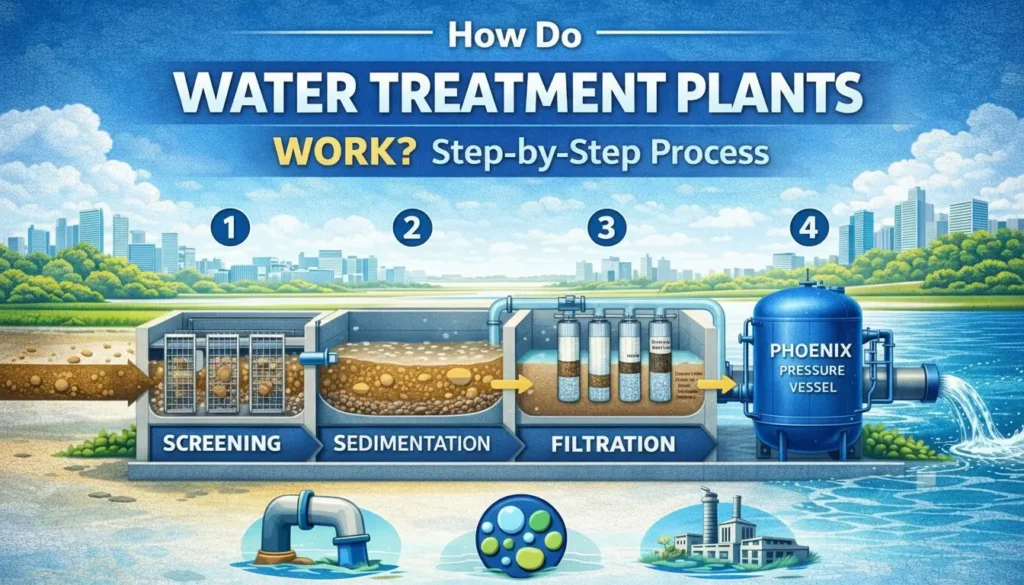
Most people don’t think about water until there’s a problem. You turn the tap, and clean water flows out. But behind that simple moment is a controlled system operating every single day. If you’ve ever asked how water treatment plants work, the answer isn’t complicated but it is structured. Water does not arrive ready to drink. It has to pass through a defined process for water treatment before it becomes safe and stable. In places like the UAE, where water quality management is critical, that process becomes even more important.
Table of Contents
ToggleOverview of Water Treatment Plants
A water treatment plant exists for one reason: to convert raw water into usable water. It runs continuously. Operators adjust flow rates, chemical dosing, and monitoring systems depending on source quality and demand. The goal is consistency. Safe water. Stable output.
What Is a Water Treatment Plant?
At its core, a water treatment plant is a facility where raw water is cleaned in stages. It doesn’t remove everything at once. Each stage targets something specific — solids, dissolved minerals, microorganisms, or organic matter. The process of water treatment works gradually, step by step.
Purpose of Water Processing Plants
The purpose is simple: protect health and protect infrastructure. Untreated water can contain bacteria, sediments, dissolved salts, and chemical impurities. If that water entered a distribution system directly, it would create both health risks and mechanical damage.
In the UAE, where desalination and ground water treatment are common, water processing plants are part of the country’s core infrastructure.
Source of Water for Treatment Plants
Everything begins with the source. The water treatment steps required will always depend on where the water comes from.
Surface Water Sources
Surface water comes from rivers, lakes, and reservoirs. Because it’s exposed to the environment, it usually carries more visible contamination: suspended solids, organic matter, sometimes algae. It often needs more intensive treatment.
Groundwater Sources
Groundwater comes from wells and aquifers. It may look clear, but that doesn’t mean it’s ready to use. It commonly contains dissolved minerals such as iron, manganese, or hardness compounds. Even in regions like the UAE, groundwater requires proper conditioning before use.
Water Treatment Process Explained
So how do water treatment plants work in practice?
Let’s walk through the stages of water treatment in order.
Pre-Treatment and Screening
The first step is intake and screening. Large debris leaves, plastic, or other solid waste is removed using mechanical screens. This protects pumps and prevents downstream blockages. It’s basic, but essential.
Coagulation and Flocculation
Next comes chemical assistance. Small suspended particles are too fine to settle naturally. So coagulant chemicals are added to help those particles bind together. They form larger clusters known as flocs. Once heavier, they can settle out during sedimentation.
Filtration in Water Treatment
After sedimentation, water moves through filtration systems. This may involve sand filters, carbon filters, pressure filters, or membrane units. Filtration removes remaining suspended particles and improves clarity. Among all water treatment steps, filtration plays a critical role in overall quality.
Disinfection and Final Treatment
Even clean-looking water can contain microorganisms. That’s why disinfection is always included. Chlorine, UV light, or ozone is used to eliminate harmful bacteria and viruses. Only after this stage is the water considered safe for storage and distribution.
Water Treatment Steps in Modern Plants
Modern facilities combine traditional processes with automation and monitoring systems. In industrial and municipal plants across the UAE, systems may also include reverse osmosis, advanced dosing units, or online monitoring sensors. Technology improves efficiency but the basic process for water treatment remains the same.
Process for Water Treatment from Intake to Distribution
The water treatment plant process step by step usually follows this order:
- Intake
- Screening
- Coagulation
- Sedimentation
- Filtration
- Disinfection
- Storage
- Distribution
Quality Testing and Monitoring
Water treatment doesn’t end once the water is clear. Operators continuously test pH, turbidity, chlorine levels, dissolved solids, and microbial content. Monitoring ensures that the process in water treatment remains stable and compliant with regulatory standards. Consistency is just as important as purity.
Different Water Treatment Methods Used in Plants
Not all plants use identical systems. The treatment method depends on source water and required output quality.
Physical Water Treatment Methods
Physical methods include screening, sedimentation, and filtration. These remove contaminants without altering chemical composition. They are usually the first stages of water treatment.
Chemical Water Treatment Methods
Chemical treatment involves adding substances to improve quality for example, coagulation chemicals or disinfectants. These steps help stabilize water and eliminate harmful organisms.
Biological Treatment Methods
Biological processes rely on microorganisms to break down organic matter. This method is more common in wastewater systems but may be used in advanced treatment facilities.
Role of Water Treatment Plants in Daily Life
Water treatment plants operate quietly in the background, yet daily life depends on them.
Drinking Water Supply
Without structured water treatment steps, drinking water would carry risks. Treatment ensures public safety and regulatory compliance.
Industrial and Municipal Water Use
Industries depend on treated water for cooling, manufacturing, and cleaning processes. Municipal systems rely on stable treatment to protect infrastructure and maintain hygiene standards. In rapidly developing regions like the UAE, water treatment supports both public health and economic growth.
Conclusion:
They function through a structured series of controlled stages. From screening and coagulation to filtration and disinfection, each stage improves water quality. The process for water treatment ensures water is safe before it reaches consumers. Without this system, both health and infrastructure would face serious challenges.
FAQs
How do water treatment plants work in simple terms?
They clean raw water through several water treatment steps before distributing it for use.
What are the main water treatment steps?
Screening, coagulation, sedimentation, filtration, and disinfection.
What is the process in water treatment?
It is the structured sequence of physical and chemical methods used to improve water quality.
Why is the process for water treatment important?
It protects public health and ensures water meets safety standards.
What are the stages of water treatment?
Common stages include intake, screening, coagulation, filtration, and final disinfection.
