
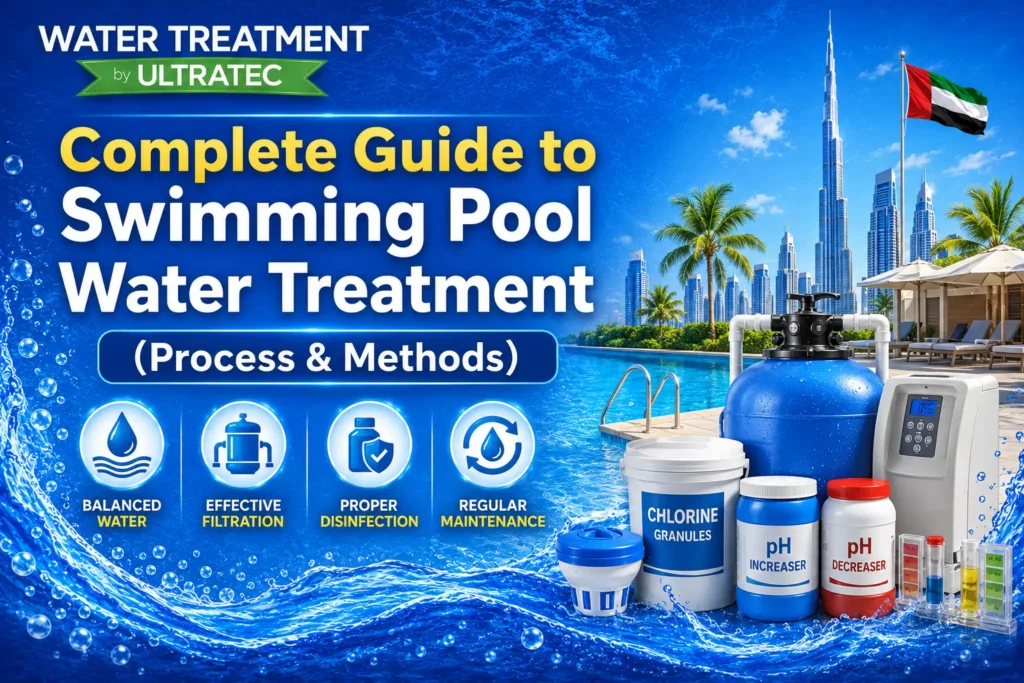
Swimming pools are a place of leisure and entertainment and it is imperative to maintain the water clean and safe. As the need to have clean, safe swimming continues to increase, water treatment becomes necessary. Regardless of whether you own a conventional pool, a salt water pool or a more sophisticated filtration system, it is important to know how the process of water treatment in a swimming pool works in order to achieve optimal water quality in your pool.
This guide will discuss the process of swimming pool water treatment, the available types of treatments, and good habits of maintaining clear and clean water. We will also give details on why a swimming pool water treatment plant is a good thing, why salt water pool treatment is necessary and what equipment is used in keeping the swimming pool safe and friendly.
Ready to dive in and find out all you should know about swimming pool water treatment
Table of Contents
ToggleEnsuring Clean and Safe Swimming: The Vital Role of Pool Water Treatment
Swimming pools are subjected to a number of contaminants such as dirt, bacteria, body oils and even leaves. This may cause water that is not only unsafe to swim in but may be quite dangerous without adequate treatment. Water in a pool must never be contaminated by microorganisms, chemicals and impurities that may lead to health complications causing skin irritation.
Aesthetics and health are dependent on the quality of pool water. The treatment plants and systems of swimming pool water make sure that the water in the pool is safe, transparent and pleasant to the swimmers. Properly treated pool water can also prolong the lifespan of the pool infrastructure by eliminating scale, rust and algae.
Essential Water Treatment Techniques for Maintaining a Swimming Pool
Water treatment in pools can be done in various ways, all with their advantages and factors to consider. We will discuss the most popular ways of swimming pool water treatment below:
Chlorine Treatment
The most common disinfectant used in pools is chlorine which is effective in the destruction of the harmful microorganisms in the water. Chlorine acts by decomposing organic material and killing bacteria and viruses.
How It Works: The addition of chlorine to pool water produces hypochlorous acid (HOCl), which disinfects water by destroying contaminants.
Benefits: Chlorine is simple to apply, cheap and gives 24-hours of protection against bacteria.
Disadvantages: Chlorine-treated pools can be stinky and excessive amounts of chlorine can be harmful to both the human skin and the appearance of the pool.
In order to sustain swimming pool water, it is important to regularly check the level of chlorine. The optimal chlorine levels are between 1.0 and 3.0 parts per million (ppm).
Saltwater Pool Treatment
Salt is introduced into a water body in a saltwater pool treatment system and this water is then changed into chlorine via a process known as electrolysis. This system is commonly preferred because it has less chlorine and is less harsh on the skin and eyes.
How It Works: Saltwater pools employ a saltwater chlorinator to make chlorine out of the salt in the water. The resulting chlorine is also a form of sodium hypochlorite, however, compared to the traditional pool systems, the saltwater process uses a considerably less amount of chlorine.
Pros: Saltwater pools are also less harsh on the eyes and skin and the water is usually clearer. They are also very economical in terms of maintenance since the salt water chlorinator will automatically generate chlorine.
Developments Disadvantages: Saltwater systems are usually more costly to install, and a saltwater pool can be corrosive to pool equipment in the long run unless well-maintained.
To work best, the pool salinity is to be in the range of 2,500-4,000 ppm.
Ozone Treatment
Another complex way of treating swimming pool water is the treatment using ozone gas (O3) which is referred to as ozone treatment.
How It Works: An ozone generator is used to produce ozone which is then injected into the pool water. Ozone is a strong oxidant that destroys bacteria, viruses and organic contaminants by disintegrating them on a chemical level.
pros: Ozone is a natural-based disinfectant, and it does not leave any harmful residual chemicals in the pool. It also minimizes the use of chlorine and leads to clearer water and less pool chemicals.
Con: Ozone treatment systems may prove to be costly to install and maintain. Also, ozone does not offer residual disinfection on its own and thus a little bit of chlorine is necessary to offer constant protection.
Ultraviolet (UV) Treatment
Treatment of harmful microorganisms in pool water using ultraviolet (UV) light is an effective method of treatment without harsh chemicals.
How It Works: UV lamps are placed in the filtration system of the pool, and when the water flows through the UV chamber, the bacteria and viruses are exposed to UV light and this kills their DNA and inactivates them.
Benefits: UV is extremely efficient in eliminating microorganisms and UV treatment is not known to change the chemical composition of the pool water.
Negatives: UV treatment, as with ozone, does not offer residual disinfection, so some chlorine or salt will be required.
Algae Control
Unless well maintained, algae are likely to grow rapidly in swimming pools. It causes pool water to become green and surfaces to become slippery. The algae buildup can be prevented with algaecides and regular cleaning.
Exploring Different Types of Swimming Pool Water Treatment Systems
Sand Filters
A sand filter is a filter that is covered with sand which is used to eliminate dirt and debris in the pool water. They are ideal for larger pools and are relatively easy to maintain.
Cartridge Filters
These form another popular choice of swimming pool water filtration. They consist of pleated cloth or paper and trap dirt, debris and contaminants.
Diatomaceous Earth (DE) Filters
DE filters consist of fossilized diatoms and are able to filter much smaller particles compared to sand filters. They are better in filtration although they need extra maintenance.
Saltwater Pool Systems
As stated, saltwater pools have a saltwater chlorinator that transforms salt into chlorine. It is a good option among those who desire a chemical-free and more natural pooling experience.
Ozone Systems
With the help of ozone generators, ozone gas is added to the pool water and bacteria are killed, which minimizes the use of chlorine.
The Key Benefits of Swimming Pool Water Treatment
Cleaner, Safer Water
Treating the pool water appropriately will make sure that the water does not contain dangerous bacteria, viruses, and algae. This renders swimming safer and enjoyable.
Reduced Maintenance Costs
Treatment of swimming pool water appropriately helps avoid the destruction of the pool surfaces and unnecessary repair, which is expensive.
Improved Water Clarity
Frequent filtration and chemical treatment keep your water clear and make sure that the water remains clean and attractive.
Longer Pool Life
Maintaining the water clean and balanced will minimize the wear and tear on the infrastructure of the pool, and give it a long life span.
More Protection on the Skin and Eyes.
When the water is treated properly the accumulation of harsh chemicals is avoided and thus the irritation of skin and redness of eyes due to poor water quality is minimized.
Swimming Pool Water Treatment Systems in UAE
It is particularly essential in the UAE to keep the pool clean because of the hot weather. The most commonly used kinds of water treatment systems in the UAE are:
- Seawater desalination with Reverse Osmosis Systems.
- UV and Ozone-based systems with a low usage of chemicals.
- Saltwater Pool Systems to minimise chlorine levels.
- Residential pool Standard Filtration Systems.
The needs in swimming pool water treatment plants are gradually increasing as the awareness of health, hygiene and water safety is increasing.
Cost Breakdown of Swimming Pool Water Treatment in UAE
| Type of Treatment | Average Cost (AED) | Ideal For |
|---|---|---|
| Reverse Osmosis (RO) System | 10,000 – 50,000 | Large pools & industrial use |
| UV Water Treatment System | 2,000 – 6,000 | Residential & small pools |
| Saltwater Pool Treatment | 5,000 – 15,000 | Residential & commercial pools |
| Chlorine-based Treatment | 1,000 – 5,000 | Budget-friendly systems |
Water Treatment System: How to select the best water treatment system in your pool.
When choosing a swimming pool water treatment system, consider the following:
- Pool Size: Bigger pools might need a more sophisticated filtration process, like RO, or DE filters.
- Budget: Decide on the amount of money you would spend on installation and maintenance.
- Maintenance: Certain systems, such as saltwater pool systems, are less expensive to maintain whereas UV and ozone systems demand greater maintenance.
- Water Source: Saltwater systems or desalination may be best suited to pools with high salt content or those in the coastal area.
Achieving Clean and Healthy Pool Water
To have a healthy and enjoyable swimming experience, it is necessary to ensure clean and safe water in your swimming pool. Through the knowledge of how swimming pool water treatment is done, the type of system you want to use and routine maintenance, you can be certain that your swimming pool is always clean and ready any time you want to use it. Do you prefer reverse osmosis, the saltwater pool systems, or the UV filtration, all of them have their own advantages and benefits which will suit various requirements.
for more information on advanced swimming pool water treatment solutions in the UAE, explore the top providers of water treatment services and enhance your pool maintenance today!
Start ensuring clean, clear, and safe water for your pool today by choosing the best water treatment system for your needs. Visit Water Treatment Services in UAE for expert guidance!
FAQs
Q1. How often should I treat my pool water?
For optimal water quality, pool water should be treated regularly. This includes daily monitoring of chemicals, weekly cleaning, and monthly filtration system maintenance.
Q2. Is reverse osmosis necessary for pool water?
RO is typically used for desalination of seawater pools or industrial applications. For residential pools, standard filtration or UV-based systems are usually sufficient.
Q3. Can I use UV treatment with other filtration systems?
Yes, UV systems work well alongside other filters like RO systems or sand filters to provide superior purification by eliminating microorganisms.
