
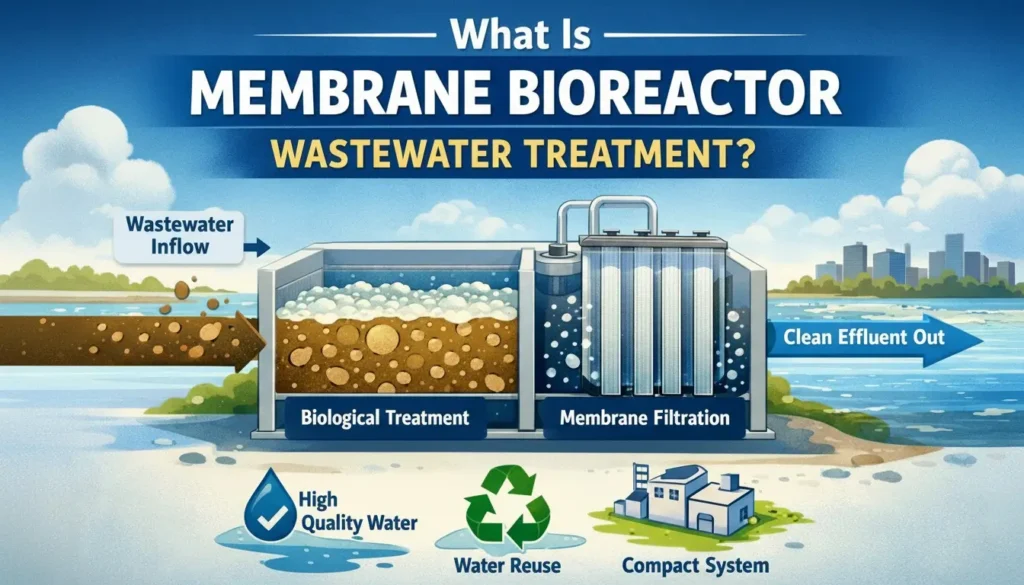
Membrane Bioreactor (MBR) wastewater treatment is an advanced water filtration technology that combines biological treatment with membrane filtration to produce high-quality effluent. In the UAE and around the world, industries and municipalities are increasingly adopting MBR systems due to their efficiency, compact design, and ability to treat wastewater effectively.
In this blog, we will explain what is membrane bioreactor wastewater treatment, how it works, its benefits, and its applications. For complete water treatment solutions in UAE, visit our comprehensive water solutions.
What is a Membrane Bioreactor?
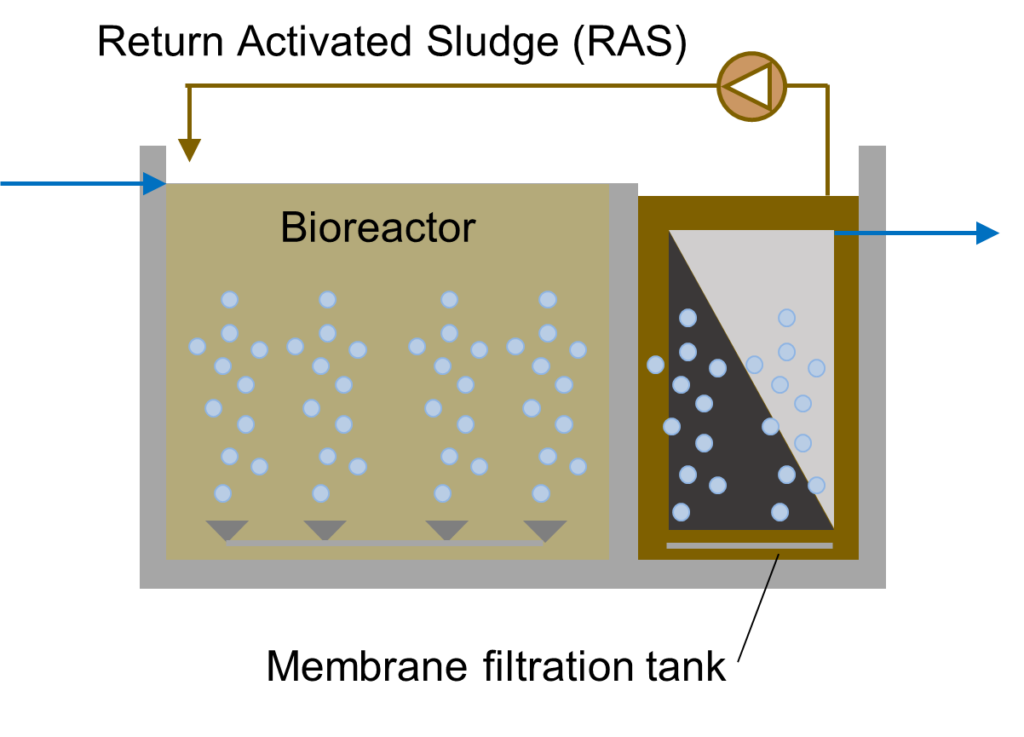
A membrane bioreactor (MBR) is a wastewater treatment system that integrates biological treatment processes with membrane filtration. The biological component uses microorganisms to break down organic matter in the wastewater. The membrane component acts as a physical barrier, filtering out suspended solids, bacteria, and other contaminants.
MBR systems are also called mbr membrane bioreactors because they combine membrane technology with biological reactors. Unlike conventional wastewater treatment systems, MBRs produce clearer, safer water suitable for reuse in irrigation, industrial processes, and even potable applications when treated further.
How Does Membrane Bioreactor Wastewater Treatment Work?
The membrane bioreactor wastewater treatment process typically involves the following steps:
- Biological Treatment
Wastewater first enters a biological reactor where microorganisms consume organic pollutants. This step reduces the biochemical oxygen demand (BOD) and breaks down harmful substances. - Membrane Filtration
After biological treatment, the water passes through ultrafiltration or microfiltration membranes. These membranes remove suspended solids, bacteria, and other pathogens. This ensures high-quality treated water. - Effluent Quality
The filtered water, also called effluent, is clean and clear, making it suitable for industrial reuse or safe discharge into the environment.
By combining these two processes, MBR systems achieve higher efficiency than traditional activated sludge systems and occupy less space, which is ideal for urban areas in the UAE.
Benefits of Membrane Bioreactor Wastewater Treatment
Adopting membrane bioreactor systems offers several advantages:
- High-Quality Effluent
MBRs produce cleaner water than conventional treatment plants, reducing the risk of waterborne diseases. - Compact Design
The integrated biological and membrane processes require less space, ideal for industrial and municipal applications in cities with limited land. - Lower Sludge Production
MBR systems generate less sludge compared to traditional treatment, reducing disposal costs. - Versatility
MBRs can handle variable wastewater loads, making them suitable for different industries and municipal setups.
Applications of Membrane Bioreactors in UAE
MBR technology is widely applied in wastewater treatment across UAE industries:
- Industrial Wastewater: Factories use MBRs to treat chemical and organic effluent.
- Municipal Wastewater: Cities use MBRs to upgrade sewage treatment plants.
- Water Reuse & Recycling: Treated water can be reused for irrigation, cooling towers, and other industrial applications.
Conclusion
Membrane bioreactor wastewater treatment is a modern solution for industries and municipalities seeking efficient, compact, and high-quality wastewater treatment. With the ability to produce clean water suitable for reuse, MBR systems are becoming a preferred choice in the UAE.
For more information and professional Membrane Bioreactors solutions, visit our Membrane Bioreactors Service Page.
FAQs
-
What is membrane bioreactor wastewater treatment?
It is a process that combines biological treatment and membrane filtration to produce high-quality treated water.
-
How does a membrane bioreactor work?
MBR works by using microorganisms to digest organic matter and membranes to filter solids and bacteria.
-
How to control a membrane bioreactor?
Control is maintained through monitoring sludge concentration, membrane cleaning schedules, and flow rates.
-
Can MBR treated water be reused?
Yes, water treated with membrane bioreactor systems is safe for industrial reuse, irrigation, and some municipal applications. Further treatment may be required for potable use depending on local regulations.
-
What are the differences between MBR and conventional wastewater treatment?
MBR systems combine biological treatment with membrane filtration, producing cleaner water in a smaller space. Conventional systems rely only on biological treatment and sedimentation, producing lower-quality effluent and requiring more space.
