Understanding Water Softeners: A Complete Guide to Softened Water
The process of softening water is very important, particularly in regions with high content of hard water. The hard water has minerals such as calcium and magnesium which may lead to plumbing and appliance problems and even personal care. Water softeners overcome these problems by eliminating hardness causing minerals. In this comprehensive guide, we will de-escalate the mechanism of water softeners, the advantages, and assist you to make a decision on whether a water softener is the ideal decision to install in your home or business premises.
What Is a Water Softener and How Does a Water Softener Work?
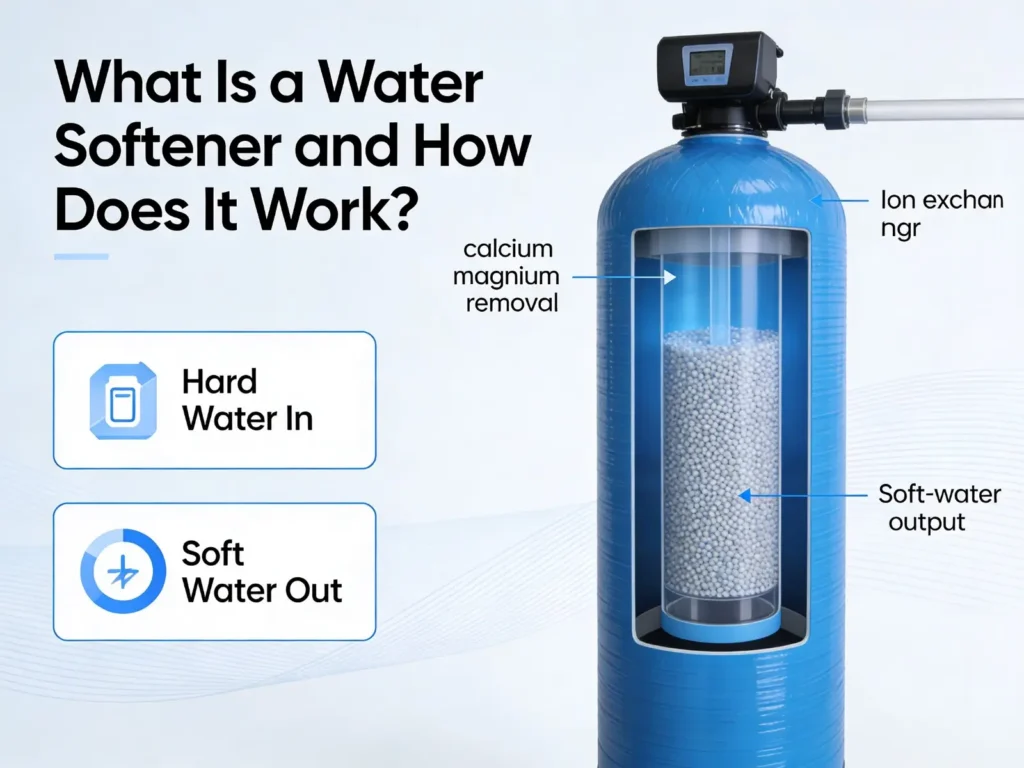
A water softener is a filtration device that eliminates water hardening minerals which are calcium and magnesium. The latter is made possible by a process called ion exchange that involves the use of resin beads to substitute the calcium and magnesium ions with sodium ions.
The Process of Ion Exchange
- Resin Beads: The softener has resin beads, which are loaded with sodium ions.
- Ion Exchange: The calcium and magnesium ions in the water are replaced with sodium ions on the resin beads as the hard water passes through the softener.
- Regeneration: When the calcium and magnesium in the resin beads are saturated they are regenerated by flushing with a salt solution to replace sodium ions and the process starts all over again.
This makes the water unscaled and more suitable to everyday use by removing the minerals that cause scaling, and other problems.
How to Choose the Right Water Softener for Your Home?
It is important to have an idea of your water quality and what factors will influence the performance before selecting the best water softener to use. These are the main considerations:
Water Hardness Level
The initial step is to determine the degree of hardness in your water, in grains per gallon (GPG). When the level of hardness of your water is more than 10 GPG, a water softener is necessary.
Flow Rate and Size of Your Home
The dimensions of the water softener will be determined by the amount of water used in the house. In case you have a big house and multiple bathrooms, then you will require a higher flow rate of a water softener.
Salt vs. Potassium
Water softeners regenerate the resin beads by the use of either salt or potassium. You can use potassium-based softeners instead, which are greener and more costly, in case you have dietary issues or simply prefer a more environmentally-friendly choice.
Advantages of Water Softeners
Installation of a water softener system has many benefits particularly in a home or business that handles hard water:
- Better Appliance Performance: Soft water does not form limescale and therefore this means that your appliances such as water heater, dishwasher and washing machine have a longer longevity.
- Enhanced Water Quality: Softened water enhances the quality of water used in drinking, cooking and bathing because it would feel smooth and pleasant.
- No More Hard Water Stains: Soft water does away with the ugly mineral deposits on sinks, faucets, and glassware.
- Skin and Hair Benefits: Softened water is beneficial in reducing skin irritation and dryness and it is suitable to those people with sensitive skin.
- Less Use of Soaps: Softened water is more effective in lathering soap and detergents and so you will need less soap and yet the same outcome.
Disadvantages of water softeners
While there are many benefits, it’s essential to be aware of the potential downsides of using a water softener:
- Sodium Content: Softened water has sodium, which might not be the best to people who are on a low-sodium diet.
- Initial Expenses: Initial installation of a water softener may be expensive and certain systems may have to be maintained frequently.
- Water Waste: Water softeners regeneration process consumes water which may cause wastage of water with time.
Is Soft Water Safe to Drink?
Water that has been softened is normally safe to drink. The loss of the calcium and magnesium ions is substituted by sodium or potassium, although the quantities are very insignificant. Nevertheless, individuals on low-sodium diets or with kidney problems are advised to regularly drink softened water after consulting their doctor.
How does a water softener work?
Water softeners are devices that manage to remove minerals that cause hardness in water by a process referred to as ion exchange. The following is a step-by-step explanation of the process:
Ion Exchange Process
- The water softener has a resin tank where it is filled with small beads which have sodium ions.
- The calcium and magnesium ions in the water are drawn to the resin beads as the hard water passes through the resin tank.
- The sodium ions on the beads are exchanged for calcium and magnesium ions, effectively “softening” the water.
Regeneration Cycle
- With time, the resin beads get filled up with calcium and magnesium ions. When this occurs, water softener undergoes a regeneration process.
- In regeneration, the system employs a brine solution (salt water) to remove the calcium and magnesium ions off the beads and in their place, sodium ions are added to restore the softening capacity of the resin.
Filtration
Some water softeners also include a filtration phase, in addition to softening the water, to eliminate other contaminants, such as chlorine or sediment.
How to soften hard water?
Hard water has to be softened by installing a water softening system, which usually comprises a water softener system. The system must be sized appropriately depending on the amount of water you use and the level of hardness of your water and this can be established by a simple test of water hardness. As soon as the system is installed, it treats the water entering your home automatically making sure that it is soft. The system will be efficiently maintained by replenishing the salt supply to the regeneration cycle on a regular basis.
Does a water softener remove iron?
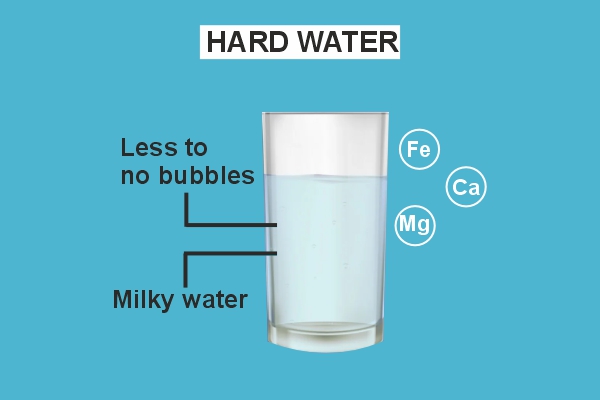
Yes, in most instances, a water softener is capable of taking out low concentrations of iron, especially ferric iron (insoluble in water) and some ferrous iron (soluble iron). Nevertheless, water softeners are mostly created to eliminate the hardness-causing minerals such as calcium and magnesium. In situations where iron levels are more excessive, a special filter or system might be required in order to extract iron more efficiently.
- Ferrous Iron: This is the most widespread type of iron in water. It is water soluble and can be invisible and leave a stain on the appliances, dishes, and laundry. Though a water softener can eliminate tiny traces of ferrous iron, more filtration might be necessary when concentrations are higher.
- Ferric Iron: This is rust-colored and is normally filtered out by the filtration system of the softener and the calcium and magnesium. The ion exchange process entraps the iron using the resin beads.
To use a high level of iron (more than 2 parts per million) though you might require an iron filter or oxidizing filter with your water softener to remove the iron in the water.
What Happens if You Don’t Use a Water Softener?
Unless you have a water softener, your home or business will feel the impact of hard water which includes:
- Scale Buildup: Deterioration of pipes, appliances, and fixtures over time, calcium and magnesium is deposited.
- Less Lifespan of Appliances: Appliances such as dishwashers and water heaters have shorter lifespan because of limescale accumulation.
- High Energy Bills: Hard water causes inefficient heating in water heaters resulting in higher energy use.
What Is the Best Water Softener for Your Home?
To determine the best water softener for your home, consider the following factors:
- Capacity: Select a system that is suitable to your home size and water consumption.
- Salt Type: Choose to be either sodium or potassium-based depending on your preference.
- Maintenance: Take into account systems with minimum maintenance needs, e.g. tank-based softeners where the filters do not have to be replaced frequently.
Conclusion: Should You Invest in a Water Softener?
In conclusion, water softeners offer significant benefits, particularly for homes and businesses dealing with hard water. By eliminating minerals like calcium and magnesium, softeners improve water quality, increase the lifespan of appliances, and make daily tasks more efficient. However, it’s important to consider the sodium content and maintenance requirements when deciding if a water softener is right for you. Explore water softener installation services for your home
Want to learn more or find the best water softening solutions in the UAE? Visit Water Treatment Services for expert advice and tailored water treatment solutions for your home or business.
FAQs
1. What does a water softener do?
A water softener removes calcium and magnesium ions from water, replacing them with sodium or potassium ions, making the water “soft.”
2. What is the disadvantage of water softeners?
The main disadvantages are the added sodium in the water, regular maintenance requirements, and potential water waste during regeneration.
3. What happens if I don’t use a water softener?
Without a water softener, hard water can cause scale buildup, reduce appliance efficiency, and leave stains on fixtures and laundry.
4. Is soft water better for your skin?
Yes, soft water is gentler on the skin, reducing dryness and irritation, which is beneficial for individuals with sensitive skin.