
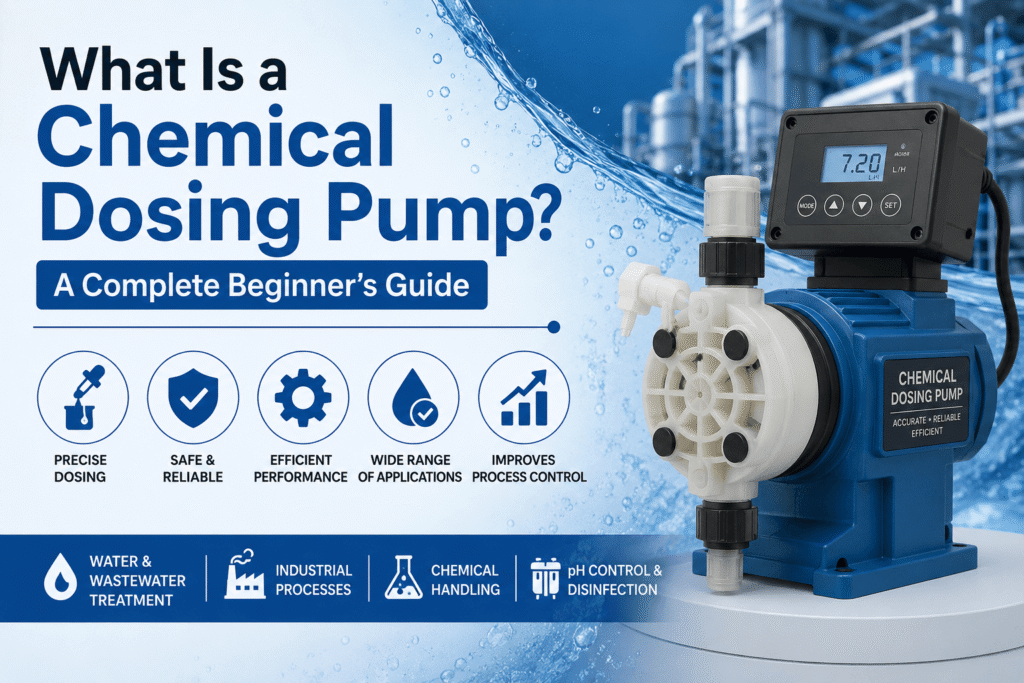
If you have ever looked at a water treatment plant, a swimming pool, a cooling tower, or even a residential water softener setup, you have probably seen a small pump quietly pushing chemicals into a pipeline. That device is a dosing pump, and it plays a far bigger role in water quality and equipment protection than most people realise.
Quick answer: A chemical dosing pump is a mechanical device that injects a precise, controlled amount of chemical into a water system or process line. It is used to disinfect water, balance pH, prevent scale, remove impurities, or protect equipment from corrosion. Dosing pumps are essential in residential, commercial, and industrial water treatment across the UAE, where water hardness and high mineral content make chemical dosing a practical necessity rather than an optional extra.
This guide explains what a dosing pump is, how it works, the different types available, and how to choose the right one for your property or facility.
What Is a Chemical Dosing Pump
A chemical dosing pump, sometimes called a metering pump, is designed to add a specific quantity of chemical to a liquid stream at a controlled rate. Unlike a standard pump that simply moves water from one place to another, a dosing pump focuses on accuracy. It delivers chemicals in small, measured doses, often just millilitres per minute, so that the treated water stays within a safe and effective chemical range.
Dosing pumps are used across many applications, including:
- Drinking water disinfection using chlorine or other sanitisers
- pH correction in swimming pools and cooling systems
- Scale and corrosion inhibition in boilers and pipelines
- Coagulant and flocculant dosing in wastewater treatment
- Antiscalant dosing before reverse osmosis systems
In the UAE, where tap water often has high mineral content, chemical dosing systems are widely used alongside softeners and RO units to protect pipework, appliances, and HVAC systems from scale buildup.
How Does a Dosing Pump Work
A typical dosing system consists of a chemical storage tank, a dosing pump, tubing, and injection fittings connected to the main water line. The pump draws chemical from the tank and injects it into the pipeline at a rate that matches the water flow or the treatment requirement.
Most dosing pumps operate using one of two mechanisms:
- Diaphragm movement, where a flexible diaphragm pushes and pulls chemical through a chamber using a set stroke length and frequency
- Peristaltic action, where rollers compress a flexible tube to move chemical forward in controlled increments
The dosing rate can usually be adjusted manually or through a digital controller, allowing the system to respond to changes in flow rate, chemical concentration, or water quality readings from a sensor.
Types of Chemical Dosing Pumps
Choosing the right pump depends on the chemical being used, the required dosing accuracy, and the scale of the system.
Electric Dosing Pump
An electric dosing pump is the most common type used in both residential and commercial setups. It runs on mains power and offers consistent, automated dosing without manual intervention. These pumps are reliable for continuous applications such as pool chlorination or cooling tower treatment.
Micro Dosing Pump
A micro dosing pump is built for applications that need very small and precise chemical volumes, often measured in microlitres. These are commonly used in laboratories, small-scale water treatment units, and sensitive industrial processes where even a slight overdose could affect results or damage equipment.
Diaphragm Dosing Pump
Known for durability and chemical resistance, diaphragm pumps are widely used in industrial dosing systems because they can handle aggressive chemicals like acids and chlorine solutions without corroding quickly.
Peristaltic Dosing Pump
These pumps are valued for their simplicity and low maintenance, since the chemical only touches the tubing and never the pump mechanism itself. This makes them a good choice for dosing corrosive or viscous chemicals.
Comparison: Which Dosing Pump Type Fits Your Needs
Here is the comparison as a straightforward checklist instead:
- For general residential or commercial water treatment: an electric dosing pump is usually sufficient and cost-effective
- For precision applications needing tiny volumes: a micro dosing pump gives the accuracy required
- For aggressive or corrosive chemicals in industrial settings: a diaphragm pump offers better chemical resistance
- For low-maintenance, easy-to-service systems: a peristaltic pump is a practical option since the chemical never contacts internal pump parts
There is no single “best” dosing pump. The right choice depends entirely on flow rate, chemical type, budget, and the level of automation the system requires.
Why Chemical Dosing Systems Matter in the UAE
Water in the UAE, whether from municipal supply or desalination, often has high mineral content and variable quality. This creates specific challenges for homes, hotels, factories, and facilities management teams:
- Hard water accelerates scale buildup in pipes, boilers, and HVAC systems
- Pools and cooling towers require consistent chlorine or biocide dosing to prevent bacterial growth
- Reverse osmosis systems need antiscalant dosing to protect membranes and extend their lifespan
- Wastewater and greywater treatment often require coagulant dosing before discharge or reuse
A properly designed chemical dosing system reduces equipment downtime, lowers long-term maintenance costs, and helps facilities stay compliant with local water quality standards. According to the World Health Organization, maintaining consistent disinfectant levels is one of the most effective ways to control microbial risk in treated water systems, which is exactly the role a dosing pumps perform.
Top Considerations When Choosing a Dosing Pump
If you are evaluating dosing pumps for your property or facility, focus on these practical factors rather than price alone.
- Flow rate compatibility – the pump must match the volume of water passing through your system
- Chemical compatibility – confirm the pump’s wetted parts can handle the specific chemical you plan to dose
- Dosing accuracy – applications like pH control or RO pretreatment need tighter tolerances than general disinfection
- Power source and automation – decide whether you need manual adjustment or a fully automated, sensor-linked system
- Maintenance requirements – peristaltic pumps typically need simpler servicing than diaphragm types
- Local support availability – working with an established dosing pump supplier in the UAE ensures you get spare parts, calibration support, and servicing without long delays
Chemical Pump Installation and Maintenance in Dubai and the UAE
Installing dosing pumps correctly is just as important as choosing the right one. Poor installation, incorrect tubing size, or an unsuitable injection point can reduce dosing accuracy and shorten pump lifespan.
Working with experienced chemical pump installation and maintenance companies in Dubai typically includes:
- Correct sizing of the dosing pump based on system flow and chemical demand
- Proper placement of injection points to ensure even chemical mixing
- Routine calibration checks to confirm dosing accuracy over time
- Preventive maintenance to avoid diaphragm wear, tubing fatigue, or clogging
- Safe handling procedures for chemical storage and refilling
Regular servicing extends the life of the pump and protects the wider water treatment system it supports, which is far more cost-effective than reactive repairs after a failure.
Water Treatment Positioning: Reliable Dosing Solutions for the UAE Market
As a water treatment company in UAE, Water Treatment works with residential buildings, hotels, industrial facilities, and commercial properties that need dependable chemical dosing solutions suited to local water conditions. Rather than offering a one-size-fits-all product, the focus is on matching the correct dosing pump type, capacity, and chemical compatibility to each system’s actual requirements.
For those looking for a dependable option, the Water Treatment Ultratec dosing pump range is built for consistent performance across pool treatment, RO pretreatment, and general water disinfection applications, with support available for installation, calibration, and ongoing maintenance across the UAE.
Frequently Asked Questions
What is the difference between a dosing pump and a regular water pump?
A regular pump moves large volumes of water. A dosing pump injects small, precise amounts of chemical into a water stream at a controlled rate.
How accurate is a chemical dosing pump?
Accuracy varies by type. Micro dosing pumps offer the highest precision, often within microlitres, while standard electric dosing pumps are accurate enough for most residential and commercial applications.
Do I need dosing pumps for my home water system in the UAE?
If you use chlorine dosing, pH correction, or antiscalant treatment before an RO system, dosing pumps is usually required to maintain consistent chemical levels.
How often should a dosing pump be serviced?
Most systems benefit from calibration checks every three to six months, depending on chemical type and usage intensity. Facilities using aggressive chemicals may need more frequent inspection, as recommended by industrial water treatment guidance from bodies such as the US EPA.
Can one dosing pump handle multiple chemicals?
No. Each chemical typically requires its own dosing pump and dedicated tubing to avoid cross-reaction and contamination.
Is a diaphragm pump better than a peristaltic pump?
Neither is universally better. Diaphragm pumps handle aggressive chemicals well, while peristaltic pumps are easier to maintain since the chemical does not touch internal pump parts.
Conclusion
A chemical dosing pump may be a small component, but it plays a central role in protecting water quality, equipment, and health across residential, commercial, and industrial systems. Understanding how these pumps work and which type suits your specific application helps you avoid unnecessary maintenance costs and keeps your water treatment system running reliably.
Whether you are managing a pool, a cooling tower, or a full water treatment plant, choosing the right dosing pump and working with an experienced supplier makes a measurable difference in long-term performance and safety.
