
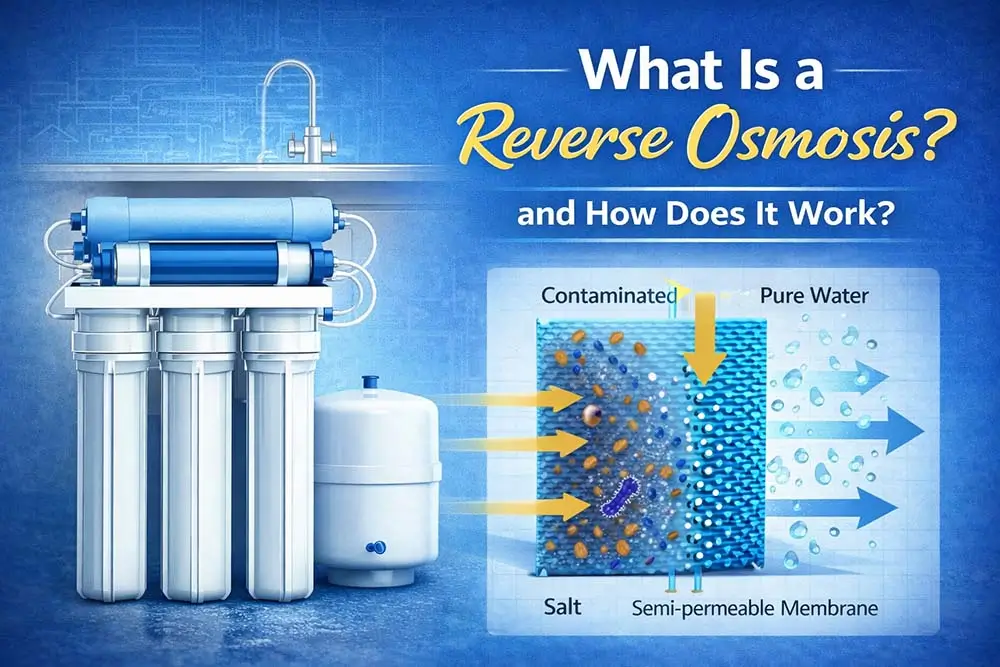
Reverse osmosis (RO) is one of the most effective water purification methods used today. But what exactly is reverse osmosis, and how does it work? In simple terms, reverse osmosis is a process that removes contaminants from water by using a semi-permeable membrane, producing clean and safe drinking water for homes, offices, and industries. In this blog, we’ll break down the reverse osmosis process, explain how RO systems work, and highlight their benefits. Learn more about installing a reverse osmosis system.
What Is Reverse Osmosis?
Reverse osmosis (RO) is a water purification process in which water is forced through a semi-permeable membrane to remove dissolved salts, impurities, and contaminants. It effectively produces clean, safe, and great-tasting water by separating harmful substances from water molecules, making it suitable for drinking, cooking, and other household or industrial uses.
How the Reverse Osmosis Process Works
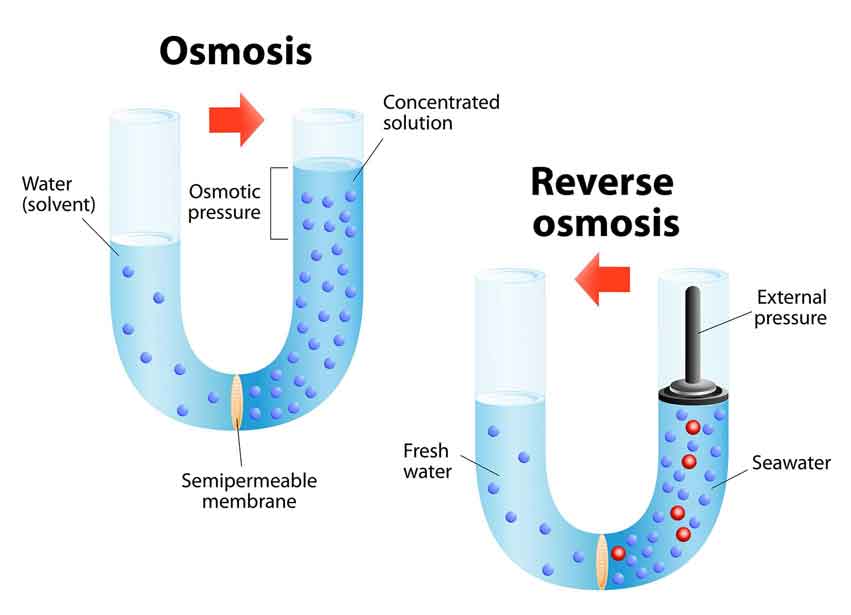
The reverse osmosis process may sound technical, but it’s straightforward once you understand the steps. Here’s how an RO system purifies water:
- Pre-Filtration: Water first passes through a sediment filter to remove large particles like sand, dirt, and rust.
- Carbon Filtration: Next, activated carbon filters remove chlorine, odors, and chemicals that could damage the RO membrane.
- RO Membrane: The heart of the system is the semi-permeable membrane. Under pressure, water passes through this membrane, leaving behind dissolved salts, heavy metals, and other contaminants.
- Post-Filtration / Polishing: Finally, water goes through a post-carbon filter for improved taste and purity.
This step-by-step filtration ensures that up to 99% of impurities are removed, making the water safe and clean to drink.
Why Reverse Osmosis Systems Are Used
Reverse osmosis systems are widely used because they are highly effective at purifying water. Key applications include:
- Drinking Water: RO systems provide clean, safe, and great-tasting water for homes and offices.
- Contaminant Removal: RO effectively removes total dissolved solids (TDS), heavy metals, chemicals, and microorganisms.
- Versatility: Suitable for residential, commercial, and industrial use.
A reverse osmosis drinking water system ensures your water is free from contaminants and healthier for daily consumption. For large-scale and industrial water purification needs, a containerized reverse osmosis plant offers a compact and efficient solution. These systems are pre-assembled and ideal for remote sites, construction projects, and industrial facilities.
For households, installing an ro plant for home ensures a continuous supply of purified and safe drinking water. These systems are compact, efficient, and ideal for daily family use.
Benefits of Reverse Osmosis Water Filtration
Using a reverse osmosis system offers several advantages:
- High Purity: Removes up to 99% of impurities, including salts, lead, and chlorine.
- Improved Taste: Filtered water tastes fresher and cleaner.
- Healthier Water: Reduces exposure to harmful chemicals and metals.
- Cost-Effective: Less need for bottled water, saving money and reducing plastic waste.
- Easy to Maintain: Modern RO systems are user-friendly and easy to install.
Whether you’re installing a reverse osmosis unit at home or choosing a system for your office, RO technology provides a reliable solution for high-quality water.
For enhanced household water purification, a 7 stages water purifier system provides advanced multi-layer filtration, including UV protection for added safety. It is an excellent choice for families looking for clean, healthy, and great-tasting drinking water.
Conclusion
Reverse osmosis is a trusted and efficient method for water purification. By understanding how it works and the benefits it offers, you can make an informed decision when choosing a reverse osmosis drinking water system for your home or workplace. Clean, safe, and healthy water is no longer a luxury. it’s a necessity, and RO technology makes it possible. Explore more about our water treatment solutions.
FAQs
What does reverse osmosis do?
Removes impurities, salts, and contaminants from water.
How does reverse osmosis work?
Water passes through a semi-permeable membrane, leaving impurities behind.
What are the benefits of a reverse osmosis system?
Provides safe, clean, and better-tasting water.
Where can I use a reverse osmosis system?
Homes, offices, schools, restaurants, and industries.
Does reverse osmosis remove minerals from water?
Yes, but essential minerals can be added back with filters.
